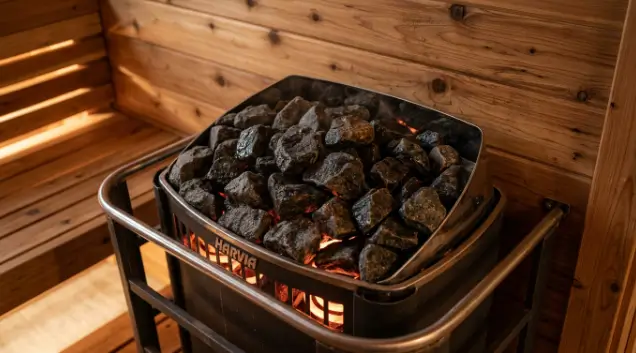

For two people sauna-ing daily, a 6kW electric heater matched to a cabin in the 200 to 300 cubic foot range is the setup that holds up best over time. Daily use doesn’t usually require a bigger heater than occasional use would; it changes how often stones get inspected, how the bench layout gets used, and how quickly a poorly sealed door becomes a real problem instead of a minor inefficiency. Getting the layout and maintenance rhythm right matters more for daily users than chasing extra kilowatts.
What Heater Size Fits Two People in Daily Use?
A well-insulated two-person cabin in the 200 to 300 cubic foot range is comfortably served by a 6kW electric heater, whether it’s used once a week or every day. The sizing math is driven by cubic footage and insulation quality, not by how many times a week the heater cycles on. Where daily use actually changes the equation is heater longevity: a unit running through 300-plus sessions a year sees far more total heating cycles than one used on weekends, so buying toward the higher end of a manufacturer’s stated warranty range is worth the modest price difference for a household planning genuinely daily use.
How Does Daily Use Change Heater Wear and Recovery Time?
Heating elements and stones both accumulate wear based on total cycles, not calendar time, so a heater used daily reaches its practical stone-replacement interval faster than one used occasionally. Recovery time between back-to-back sessions, relevant for a two-person household where partners sometimes sauna at different times, generally sits around 15 to 20 minutes for a 6kW unit to re-stabilize after the door has been open and closed a few times. Stones that have cracked or worn smooth from repeated heat cycling lose some of their ability to hold and release heat evenly, which is the main practical sign that daily use is catching up to the equipment.
What Layout Works Best for a Two-Person Cabin?
An L-shaped or straight two-tier bench arrangement is standard for two-person cabins, letting one person sit higher for more intense heat while the other sits lower for a milder session, a detail that matters more when two people are sharing a routine daily rather than occasionally. Placing the heater in the corner farthest from the bench seating, with the guard rail oriented away from foot traffic, keeps a small cabin’s single realistic path to the door clear. For couples who use the cabin at slightly different times, a bench long enough for one person to lie down comfortably adds flexibility that a narrower single-tier layout doesn’t offer.
What Does Regular Sauna Use Do for the Body?
Research on frequent sauna use is built mainly on Finnish cohort data and points toward some real associations, without amounting to a guarantee for any one person. A large cohort study found men who used a sauna four to seven times weekly had lower rates of fatal cardiovascular events and all-cause mortality than men who used one once weekly, an association that held after adjusting for other risk factors. A 2018 review in Mayo Clinic Proceedings summarized comparable cardiovascular associations across several studies. These are population-level findings, not individual proof, and couples with any cardiovascular condition should treat daily use as a topic worth raising with a doctor rather than an automatic benefit.
What Should Two Daily Users Budget For Upkeep?
Stones are the most predictable ongoing cost, with a full stone rotation or replacement generally recommended every 6 to 12 months under daily use versus roughly annually for occasional users. A quick post-session check of the door seal and bench surfaces for buildup takes only a few minutes and prevents small issues from becoming bigger repairs. Electrical costs rise with total run time rather than with any single session, so daily users should expect a modestly higher monthly electric bill than someone using the same heater a couple of times a week, proportional to actual hours the element is drawing power.
How Should Two People Handle Scheduling Around One Cabin?
A single-heater, two-person household using the cabin daily usually settles into either a shared session together or a staggered routine where one person goes right after the other while the heater is already warm. The staggered approach saves electricity, since the heater doesn’t fully cool between uses, but it does mean the second person’s session starts closer to the first person’s stopping point rather than from a cold start. Couples who prefer separate sessions for different reasons, one wanting a quiet solo routine and the other preferring company, often find that scheduling around the heater’s natural recovery window works better than trying to force a shared session that doesn’t fit both people’s actual preferences. Building in a buffer of 15 to 20 minutes between back-to-back sessions also gives the door and bench surfaces time to dry slightly, which helps the wood hold up better over years of daily use than sessions run back to back with no gap at all. Households that settle into a consistent time of day, evening after work or first thing in the morning, tend to stick with a daily routine longer than those trying to fit a session in wherever the schedule allows that particular day, mostly because a fixed slot removes the daily decision of when to actually go out and turn the heater on.
When comparing heater packages built for frequent use, checking published stone capacity and warranty terms is worth the extra few minutes before buying. Couples setting up a daily routine can look at what the team at SweatDecks lists for stone load and warranty length on the 6kW package before finalizing a two-person cabin order.
Frequently Asked Questions
What size heater is right for two people using a sauna daily? A 6kW electric heater is typically enough for a two-person cabin in the 200 to 300 cubic foot range, even under daily use. Daily use changes maintenance frequency more than raw sizing.
Does daily use wear out a sauna heater faster? Yes, elements and stones see more total cycles per year. Most residential heaters handle daily sessions for years, but stones should be inspected and rotated more often.
How long should two people sauna together each day? A common pattern is two to three rounds of 10 to 15 minutes with a cooldown between, totaling 30 to 45 minutes per session.
What upkeep matters most for a two-person daily sauna? Stone inspection and rotation, checking the door seal, and periodic bench wipe-downs matter more under daily use. A quick check after each session catches most issues early.
References
- Effects of heat and cold on health, with special reference to Finnish sauna bathing, American Journal of Physiology – Regulatory, Integrative and Comparative Physiology, 2018
- Cardiovascular and Other Health Benefits of Sauna Bathing: A Review of the Evidence, Mayo Clinic Proceedings, 2018
- Clinical Effects of Regular Dry Sauna Bathing: A Systematic Review, Evidence-Based Complementary and Alternative Medicine, 2018
By Grant Sutcliffe